New Year’s Resolution Reading List: 9 Books on Reading and Writing
by Maria Popova
Dancing with the absurdity of life, or what symbolism has to do with the osmosis of trash and treasure.
 As far as New Year’s resolutions go, hardly anything does one’s mental, spiritual, and creative health more good than resolving to read more and write better. Today’s reading list addresses these parallel aspirations. And since the number of books written about reading and writing likely far exceeds the reading capacity of a single human lifetime, this omnibus couldn’t be — shouldn’t be — an exhaustive list. It is, instead, a collection of timeless texts bound to radically improve your relationship with the written word, from whichever side of the equation you approach it.
 THE ELEMENTS OF STYLE
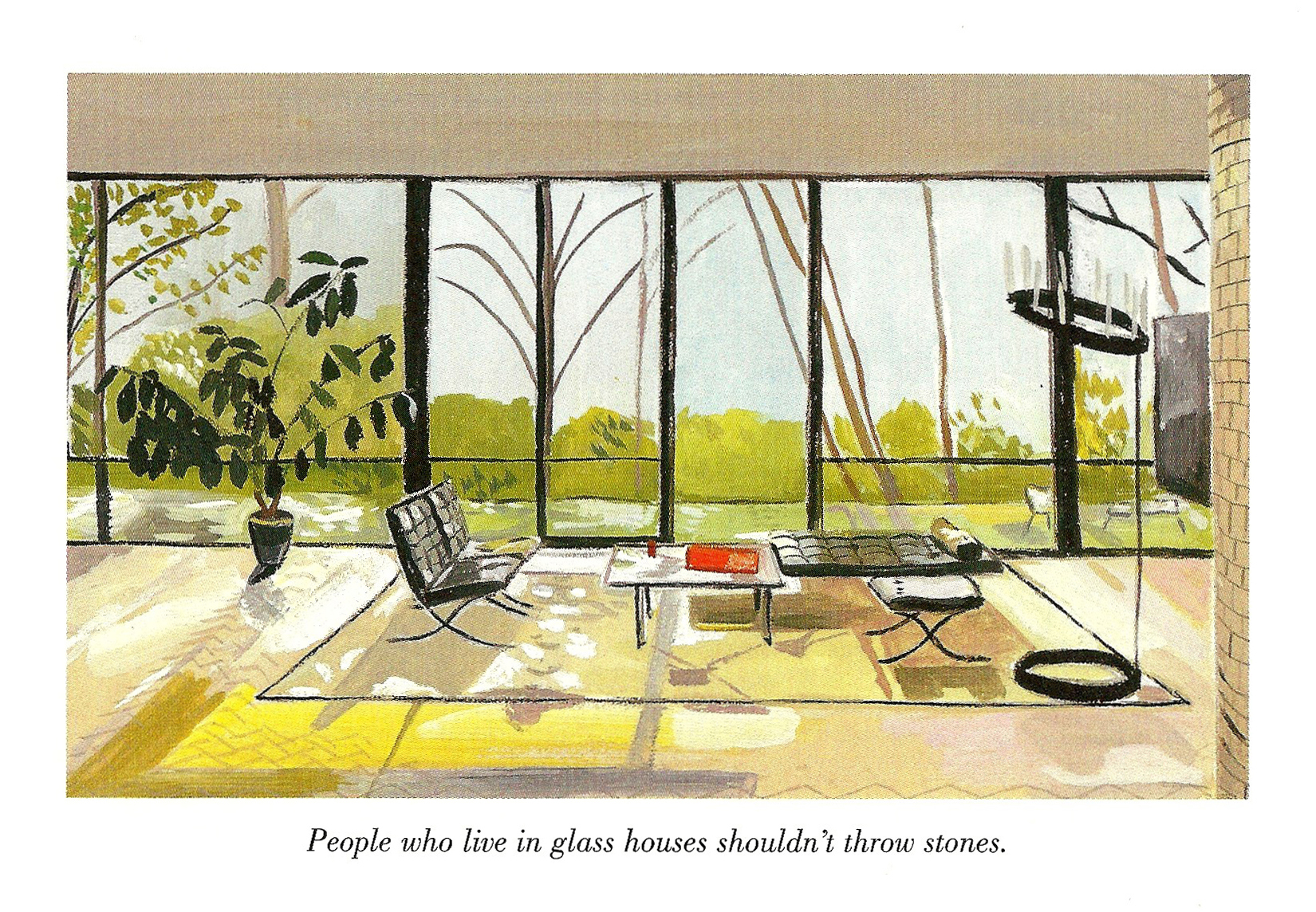
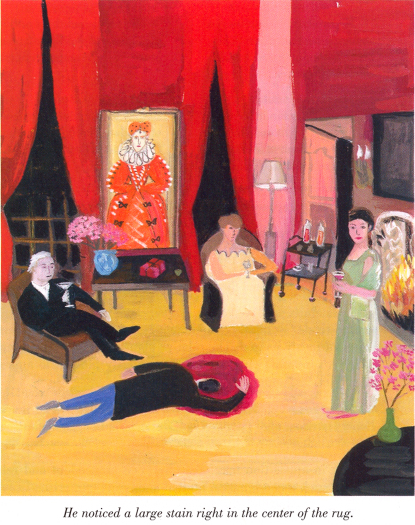
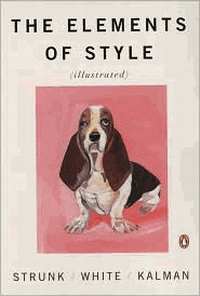 If anyone can make grammar fun, it’sMaira Kalman — The Elements of Style Illustrated marries Kalman’s signature whimsy with Strunk and White’s indispensable style guide to create an instant classic.
The original Elements of Style was published in 1919 in-house at Cornell University for teaching use and reprinted in 1959 to become cultural canon, and Kalman’s inimitable version is one of our 10 favorite masterpieces of graphic nonfiction.
On a related unmissable note, let the Elements of Style Rap make your day.
 BIRD BY BIRD
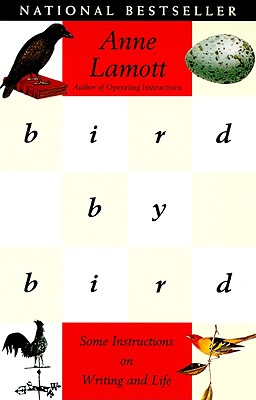 Anne Lamott might be best known as a nonfiction writer, but Bird by Bird: Some Instructions on Writing and Life affirms her as a formidable modern philosopher as well. The 1994 classic is as much a practical guide to the writer’s life as it is a profound wisdom-trove on the life of the heart and mind, with insight on everything from overcoming self-doubt to navigating the osmotic balance of intuition and rationality.
On the itch of writing, Lamott banters:
We are a species that needs and wants to understand who we are. Sheep lice do not seem to share this longing, which is one reason why they write so little. But we do. We have so much we want to say and figure out.”
You begin to string words together like beads to tell a story. You are desperate to communicate, to edify or entertain, to preserve moments of grace or joy or transcendence, to make real or imagined events come alive. But you cannot will this to happen. It is a matter of persistence and faith and hard work. So you might as well just go ahead and get started.”
On why we read and write:
Writing and reading decrease our sense of isolation. They deepen and widen and expand our sense of life: they feed the soul. When writers make us shake our heads with the exactness of their prose and their truths, and even make us laugh about ourselves or life, our buoyancy is restored. We are given a shot at dancing with, or at least clapping along with, the absurdity of life, instead of being squashed by it over and over again. It’s like singing on a boat during a terrible storm at sea. You can’t stop the raging storm, but singing can change the hearts and spirits of the people who are together on that ship.”
 ON WRITING
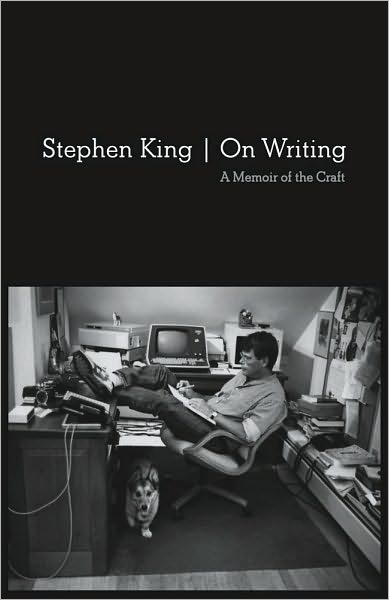 Hailed as one of the most successful writers alive, Stephen King has hundreds of books under his belt, most of which bestsellers. On Writing: A Memoir of the Craft is part master-blueprint, part memoir, part meditation on the writer’s life, filtered through the lens of his near-fatal car crash and the newfound understanding of living it precipitated.
Though some have voiced skepticism regarding the capacity of a “popular writer” to be taken seriously as an oracle of “good writing,” Roger Ebert put itbest: “After finding that his book On Writing had more useful and observant things to say about the craft than any book since Strunk and White’s The Elements of Style, I have gotten over my own snobbery.”
A few favorites from the book follow.
On open-endedness:
Description begins in the writer’s imagination, but should finish in the reader’s.”
On feedback:
Write with the door closed, rewrite with the door open.”
On the lifeblood of writing:
It starts with this: put your desk in the corner, and every time you sit down there to write, remind yourself why it isn’t in the middle of the room. Life isn’t a support system for art. It’s the other way around.”
On the relationship between reading and writing, which I wholeheartedly second:
Can I be blunt on this subject? If you don’t have time to read, you don’t have the time (or the tools) to write. Simple as that.”
 ZEN IN THE ART OF WRITING
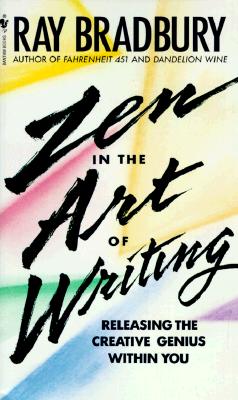 In Zen in the Art of Writing: Releasing the Creative Genius Within You, Ray Bradbury — acclaimed author, dystopian novelist, hater of symbolism — shares not only his wisdom and experience in writing, but also his contagious excitement for the craft. Blending practical how-to’s on everything from finding your voice to negotiating with editors with snippets and glimpses of the author’s own career, the book is at once a manual and a manifesto, imbued with equal parts insight and enthusiasm.
On the key to creativity (cue in Elizabeth Gilbert’sTED talk):
That’s the great secret of creativity. You treat ideas like cats: you make them follow you.”
On what to read:
In your reading, find books to improve your color sense, your sense of shape and size in the world.”
On art and truth:
We have our Arts so we won’t die of Truth.”
On signal and noise, with an embedded message that “you are a mashup of what you let into your life”:
Ours is a culture and a time immensely rich in trash as it is in treasures.”
 THE WAR OF ART
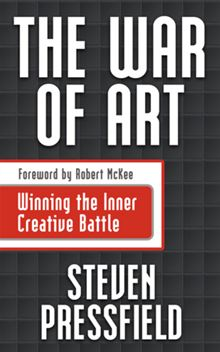 Steven Pressfield is a prolific champion of the creative process, with all its trials and tribulations, best-known for The War of Art: Break Through the Blocks and Win Your Inner Creative Battles — a personal defense system of sorts against our greatest forms of resistance. “Resistance” with a capital R, that is.
Are you paralyzed with fear? That’s a good sign. Fear is good. Like self-doubt, fear is an indicator. Fear tells us what we have to do. Remember our rule of thumb: The more scared we are of a work or calling, the more sure we can be that we have to do it.Resistance is experienced as fear; the degree of fear equates the strength of Resistance. Therefore, the more fear we feel about a specific enterprise, the more certain we can be that that enterprise is important to us and to the growth of our soul.”
Also of note: Pressfield’s recent companion guide to the text, Do The Work, one of our 5 favorite manifestos for the creative life.
 ADVICE TO WRITERS
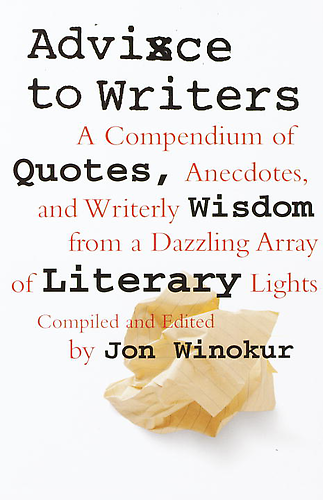 Advice to Writers is “a compendium of quotes, anecdotes, and writerly wisdom from a dazzling array of literary lights,” originally published in 1999. From how to find a good agent to what makes characters compelling, it spans the entire spectrum of the aspirational and the utilitarian, covering grammar, genres, material, money, plot, plagiarism, and, of course, encouragement.
Here are a few favorites:
Finish each day before you begin the next, and interpose a solid wall of sleep between the two. This you cannot do without temperance.” ~ Ralph Waldo Emerson
Don’t ever write a novel unless it hurts like a hot turd coming out.” ~ Charles Bukowski
Breathe in experience, breathe out poetry.” ~ Muriel Rukeyser
Begin with an individual and you find that you have created a type; begin with a type and you find that you have created — nothing.” ~ F. Scott Fitzgerald
You never have to change anything you got up in the middle of the night to write.” ~ Saul Bellow
Immature poets imitate; mature poets steal.” ~ T. S. Eliot
Fiction is a lie, and good fiction is the truth inside the lie.” ~Stephen King
Good fiction is made of what is real, and reality is difficult to come by.” ~ Ralph Ellison
Listen, then make up your own mind.” ~ Gay Talese
Find a subject you care about and which you in your heart feel others should care about. It is this genuine caring, not your games with language, which will be the most compelling and seductive element in your style.” ~ Kurt Vonnegut
Write without pay until somebody offers pay; if nobody offers within three years, sawing wood is what you were intended for.” ~ Mark Twain
Originally featured, with more quotes, last December.
 HOW TO WRITE A SENTENCE
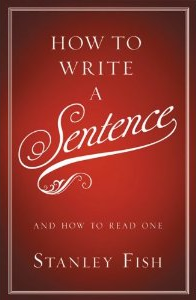 Humbly titled yet incredibly ambitious, How to Write a Sentence: And How to Read One by Stanley Fish isn’t merely a prescriptive guide to the craft of writing — it’s also a rich and layered exploration of language as an evolving cultural organism. It belongs not on the shelf of your home library but in your brain’s most deep-seated amphibian sensemaking underbelly — an insightful, rigorous manual on the art of language that may just be one of the best such tools since The Elements of Style.
In fact, Fish offers an intelligent rebuttal of some of the cultish mandates of Strunk and White’s bible, most notably the blind insistence on brevity and sentence minimalism. To argue his case, he picks apart some of history’s most powerful sentences, from Shakespeare to Dickens to Lewis Carroll, using a kind of literary forensics to excavate the essence of beautiful language. As Adam Haslett eloquently observes in his excellent FTreview:
[Pared-down prose] is a real loss, not because we necessarily need more Jamesian novels but because too often the instruction to ‘omit needless words’ (Rule 17) leads young writers to be cautious and dull; minimalist style becomes minimalist thought, and that is a problem.”
To dissect the Tetris-like quality of words, Fish examines the following Anthony Burgess sentence from his 1968 novel Enderby Outside:
‘And the words slide into the slots ordained by syntax, and glitter as with atmospheric dust with those impurities which we call meaning.’Before the words slide into their slots, they are just discrete items, pointing everywhere and nowhere. Once the words are nested in the places ‘ordained’ for them — ‘ordained’ is a wonderful word that points to the inexorable logic of syntactic structures — they are tied by ligatures of relationships to one another. They are subjects or objects or actions or descriptives or indications of manner, and as such they combine into a statement about the world, that is, into a meaning that one can contemplate, admire, reject, or refine.”
Originally featured here last January.
 ERNEST HEMINGWAY ON WRITING
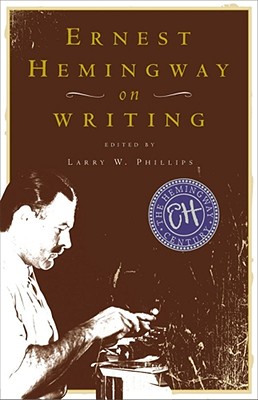 Ernest Hemingway famously maintained that it was bad luck to talk about writing. Yet, over the course of his career, he frequently wrote about writing in his novels and short stories, his letters to editors, friends, critics, and lovers, in interviews, and even in articles specifically commissioned on the subject. In Ernest Hemingway on Writing, editorLarry W. Phillips culls the finest, wittiest, most profound of Hemingway’s reflections on writing, the nature of the writer, and the elements of the writer’s life. The slender volume packs insights on everything from work habits to mood management to discipline to knowing what to leave out, delivered with Hemingway’s unmistakable personality and his signature zeal for integrity.
On what makes a great book:
All good books are alike in that they are truer than if they had really happened and after you are finished reading one you will feel that all that happened to you and afterwards it all belongs to you: the good and the bad, the ecstasy, the remorse and sorrow, the people and the places and how the weather was. If you can get so that you can give that to people, then you are a writer.”
On symbolism:
There isn’t any symbolysm [sic]. The sea is the sea. The old man is an old man. The boy is a boy and the fish is a fish. The sharks are all sharks no better and no worse. All the symbolism that people say is shit. What goes beyond is what you see beyond when you know.”
(Cue in other famous writers on symbolism, from Jack Kerouac to Ray Bradbury to Ayn Rand.)
On the qualities of a writer:
All my life I’ve looked at words as though I were seeing them for the first time.”
First, there must be talent, much talent. Talent such as Kipling had. Then there must be discipline. The discipline of Flaubert. Then there must be the conception of what it can be and an absolute conscience as unchanging as the standard meter in Paris, to prevent faking. Then the writer must be intelligent and disinterested and above all he must survive. Try to get all these things in one person and have him come through all the influences that press on a writer. The hardest thing, because time is so short, is for him to survive and get his work done.”
The most essential gift for a good writer is a built-in, shockproof shit detector. This is the writer’s radar and all great writers have had it.”
 HOW TO READ A BOOK
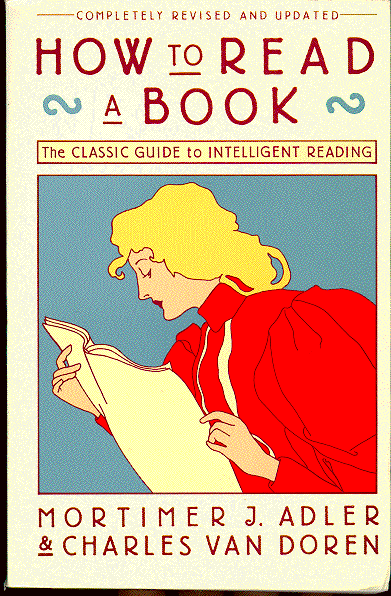 How to Read a Book, originally written by Mortimer Adler in 1940 and revised with Charles van Doren in 1972, is the kind of book often described as a “living classic” — “classic” because it deals with the fundamental and unchanging mesmerism of the written word, and “living” because it does so in a way that divorces this mesmerism from its hard medium, allowing the essence to evolve as our culture has evolved over the decades. From basic reading to systematic skimming and inspectional reading to speed reading, Adler’s how-to’s apply as efficiently to practical textbooks and science books as they do to poetry and fiction.
One of the book’s finest points deals with the fundamental yin-yang of how ideas travel and permeate minds — the intertwined acts of reading and writing. Marginalia — those fragments of thought and seeds of insight we scribble in the margins of a book — have a social life all their own: just ask The New York Times’Sam Anderson, who recently shared his year’s worth of marginalia in a wonderful interactive feature. Hardly anything captures both the utilitarian necessity and creative allure of marginalia better than this excerpt from Adler’s classic:
When you buy a book, you establish a property right in it, just as you do in clothes or furniture when you buy and pay for them. But the act of purchase is actually only the prelude to possession in the case of a book. Full ownership of a book only comes when you have made it a part of yourself, and the best way to make yourself a part of it — which comes to the same thing — is by writing in it.Why is marking a book indispensable to reading it? First, it keeps you awake — not merely conscious, but wide awake. Second, reading, if it is active, is thinking, and thinking tends to express itself in words, spoken or written. The person who says he knows what he thinks but cannot express it usually does not know what he thinks. Third, writing your reactions down helps you to remember the thoughts of the author.Reading a book should be a conversation between you and the author. Presumably he knows more about the subject than you do; if not, you probably should not be bothering with his book. But understanding is a two-way operation; the learner has to question himself and question the teacher, once he understands what the teacher is saying. Marking a book is literally an expression of your differences or your agreements with the author. It is the highest respect you can pay him.”
First featured here, along with a meditation on modern marginalia, in December.